
Resources
Thoughtful guidance on sustainable wellness, nervous system regulation, fitness, recovery, and habit change.

Building a Wellness Routine That Lasts
A wellness routine that lasts isn't static. It's a living practice that evolves with you.
Most wellness routines are built for a season, not a lifetime. They're often designed around a temporary goal — a vacation, an event, a New Year's resolution — and they become difficult to maintain once that initial motivation fades.
A wellness routine that’s designed to be sustainable looks different. It's built around your actual life, not an idealized version of it, and it's designed to flex as your circumstances change.
Here's how to build a routine that holds up over months and years, not just weeks.
Why most routines don't survive real life
Routines often fail not because people lack discipline, but because the routine itself wasn’t designed for the realities of a busy, unpredictable life.
They depend on perfect conditions — full energy, open schedule, no interruptions
They're built around motivation rather than systems
They don't account for stress, illness, travel, or life changes
They treat any deviation as failure, which makes starting over feel pointless
What a durable wellness routine is built on
Routines that last are built on flexible structure — consistent enough to create real change, flexible enough to bend without breaking.
A baseline practice you can do even on your hardest days
A slightly expanded version for days when you have more capacity
Built-in nervous system support, not just physical training
Regular reassessment as your life and needs shift
How to design your routine around real constraints
Rather than designing your ideal routine and hoping your life conforms to it, start with your actual constraints and build from there.
Ask yourself a few honest questions:
What does a realistic week actually look like for me right now?
What's the smallest version of this practice I could do consistently?
What tends to derail me, and how can I plan around it in advance?
What support would help me stay consistent without relying purely on willpower?
Why support can make routines more sustainable
Many people build the most durable routines not by figuring it out alone, but by working with someone who can help them adjust the plan as life changes — rather than abandoning it altogether when things shift.
A wellness routine that lasts isn't static. It’s an ongoing practice that evolves with you, supported by check-ins, adjustments, and a foundation strong enough to hold steady through life's inevitable disruptions.
If you’re looking for a more sustainable and supportive approach to wellness, Wellness with Nixa offers personal training, nervous system regulation sessions, and wellness coaching designed to support long-term wellbeing. Learn more about these services or book a Complimentary Clarity Call.
———
Research & Further Reading
Research on long-term behavior change consistently shows that sustainable routines are usually built through flexibility, repetition, self-awareness, and supportive environments rather than extreme short-term motivation. Wellness practices also tend to be more sustainable when they can adapt to real-life stressors, changing schedules, and fluctuating energy levels.
If you'd like to explore the research further, these studies and resources provide additional context:
Deci, E. L., & Ryan, R. M. Self-Determination Theory and the Facilitation of Intrinsic Motivation, Social Development, and Well-Being
This foundational research explores how autonomy, realistic goals, and internal motivation support sustainable long-term behavior change.Lally, P., van Jaarsveld, C. H. M., Potts, H. W. W., & Wardle, J. How Are Habits Formed: Modelling Habit Formation in the Real World
This study examines how repeated small behaviors gradually become more automatic over time, supporting the article’s emphasis on consistency and realistic routines.Seligman, M. E. P. Flourish: A Visionary New Understanding of Happiness and Well-Being
This book discusses sustainable wellbeing through adaptable habits, supportive systems, and long-term psychological resilience rather than perfectionism.World Health Organization. Mental Health: Strengthening Our Response
This resource highlights the relationship between daily wellbeing practices, stress management, resilience, and overall health across changing life circumstances.

What Happens During a Wellness Session
You won't leave with homework designed to overwhelm you — you'll leave with something realistic to build on until our next time together.
If you've never worked with a wellness coach before, it's natural to wonder what an actual session looks like. Will it feel like a workout? A conversation? Something else entirely?
The answer depends on the type of session and what you need that day — but every session is built around the same foundation: working with your current physical and mental capacity rather than forcing a one-size-fits-all approach.
Here's a look at what to expect, so you can walk in feeling prepared rather than uncertain.
How a session typically begins
Every session starts with a check-in — a few minutes to talk through how you're feeling physically and mentally that day. These conversations help shape what the session will focus on.
Stress levels, sleep, energy, and any physical discomfort all inform how the session is structured. A session on a high-stress day will look different than one on a day you're feeling strong and energized — and that's intentional.
What a personal training session involves
Personal training sessions are built around progressive, intelligent strength and mobility work tailored to your current capacity, not a generic program.
A movement-based warm-up to prepare the body and assess how it's feeling
Strength and mobility exercises tailored to your goals and current energy
Form cues and modifications as needed, with attention to how your body is responding in real time
A cool-down that supports recovery, not just an abrupt stop
What a nervous system regulation session involves
These sessions are slower-paced and centered on calming and regulating the nervous system through somatic and body-based techniques.
Breathwork intended to support relaxation and nervous system regulation
Somatic movement to help reduce physical tension and increase body awareness
Yoga-based practices tailored to where you are that day, not a fixed sequence
Optional sound-based elements that some people find calming and supportive
What to expect after a session
After a session, you'll typically have a few minutes to reflect on how your body and mind feel, along with practical takeaways you can carry into your day or week.
You won’t leave with an overwhelming list of things to do — you'll leave with something realistic to build on until our next time together.
A brief reflection on how the session felt in your body
One or two practical takeaways to carry forward
Clarity on what to expect heading into your next session
If you’re looking for a more sustainable and supportive approach to wellness, Wellness with Nixa offers personal training, nervous system regulation sessions, and wellness coaching designed to support long-term wellbeing. Learn more about these services or book a Complimentary Clarity Call.
———
Research & Further Reading
Wellness practices that combine movement, stress regulation, and supportive coaching can help people build greater awareness of their physical and emotional wellbeing over time. Research also suggests that individualized approaches and supportive practitioner relationships may improve consistency, confidence, and long-term behavior change.
If you'd like to explore the research further, these studies and resources provide additional context:
American College of Sports Medicine. ACSM’s Guidelines for Exercise Testing and Prescription
This foundational resource supports the importance of individualized movement programming, gradual progression, and adapting exercise to a person’s current capacity.Kabat-Zinn, Jon. Full Catastrophe Living
This foundational text explores mindfulness-based stress reduction and the role of body awareness, stress regulation, and present-moment practices in overall wellbeing.Mehling, W. E., et al. The Multidimensional Assessment of Interoceptive Awareness (MAIA)
This research explores body awareness and interoception, helping support the article’s emphasis on noticing physical and emotional states during wellness practices.Schmalzl, L., Powers, C., & Henje Blom, E. Neurophysiological and Neurocognitive Mechanisms Underlying the Effects of Yoga-Based Practices: Towards a Comprehensive Theoretical Framework
This review discusses how yoga, breathing, and body-based practices may influence stress regulation, attention, and overall wellbeing.
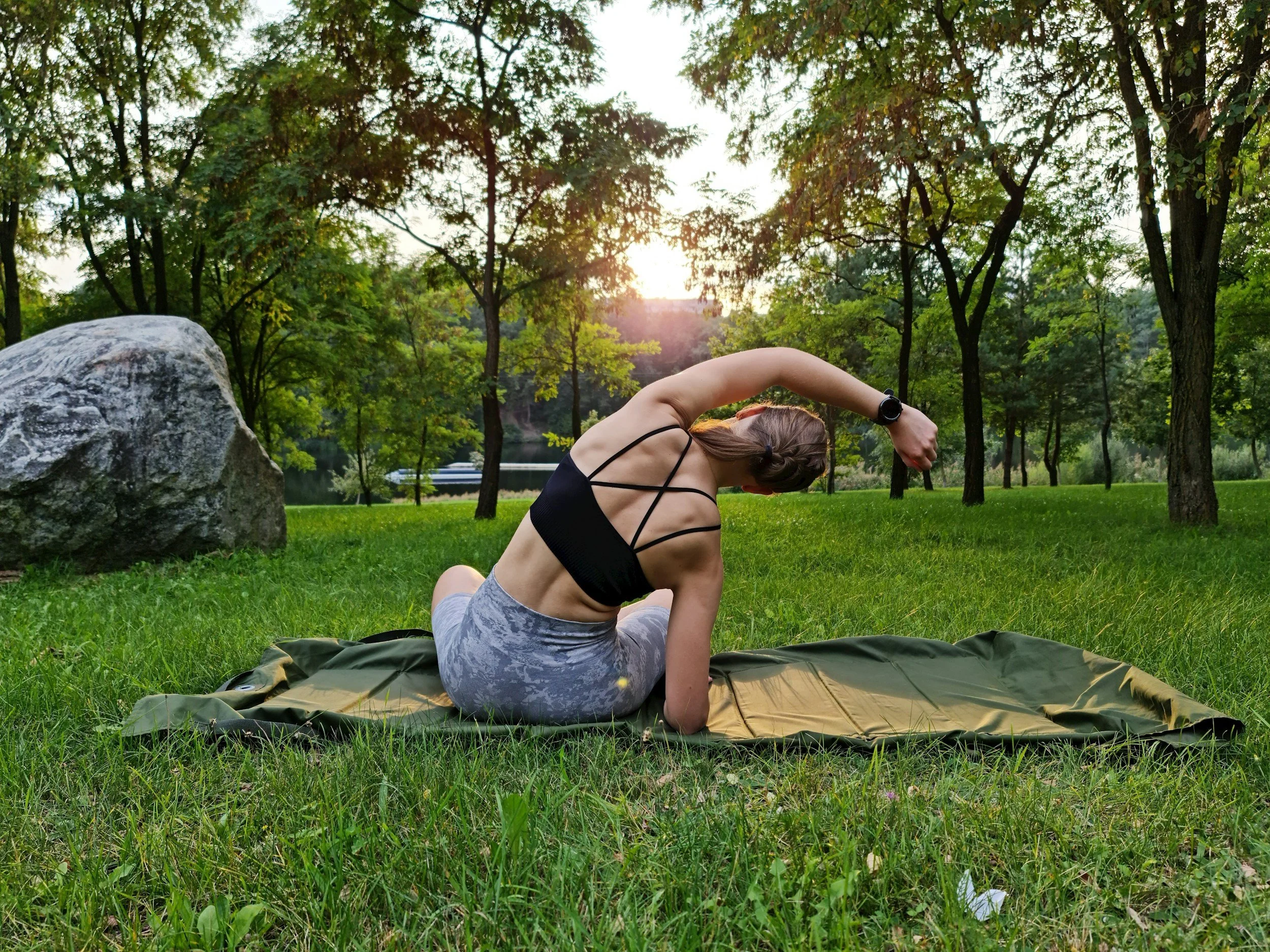
Beginner-Friendly Wellness Practices to Start Today
The goal at the beginning isn't intensity. It's consistency and familiarity with your own body.
Starting a wellness practice can feel overwhelming when you're surrounded by advice about perfect routines, optimization, and constant self-improvement. The truth is, the most effective starting point is usually the simplest one.
You don't need special equipment, a perfect schedule, or advanced knowledge to begin supporting your body and nervous system. You just need a few accessible practices and the willingness to start small.
Here are beginner-friendly practices that can meaningfully support your wellbeing — and how to ease into them without overwhelm.
Why starting small matters more than starting big
Many people abandon wellness routines because they start with something unsustainable — an hour-long workout, an elaborate morning routine, a complicated meal plan.
Small, repeatable actions are far more likely to become lasting habits than dramatic ones. The goal at the beginning isn't intensity. It’s building consistency and becoming more familiar with your own body.
Simple movement practices to begin with
Movement doesn't need to be complicated to be valuable. These beginner-friendly options build a foundation without requiring prior experience:
A 10–15 minute daily walk, ideally outdoors
Gentle bodyweight strength exercises — squats, modified push-ups, or seated movements
Beginner-level yoga or stretching sequences focused on mobility
Short, guided sessions rather than open-ended workouts, especially at the start
Nervous system practices anyone can start
These practices require no equipment and can be done almost anywhere, making them an easy entry point into nervous system support:
Slow, extended exhale breathing — four counts in, six to eight counts out
A few minutes of stillness without screens, especially before bed
Gentle self-touch or grounding techniques, like placing a hand on your chest or stomach
Stepping outside for a few minutes of natural light and fresh air
How to build momentum without overwhelm
The most sustainable approach is to choose one or two practices, not five. It’s okay to start smaller than feels meaningfu — a two-minute breathing practice counts. A ten-minute walk counts.
As these small practices become familiar, they often begin to feel more supportive and sustainable. Then, adding more becomes far more natural than trying to do everything at once.
Choose one movement practice and one nervous system practice to start
Anchor each one to an existing part of your day
Track consistency, not intensity, in the early weeks
Expect adjustment — it's normal for new practices to feel unfamiliar before they feel natural
If you’re looking for a more sustainable and supportive approach to wellness, Wellness with Nixa offers personal training, nervous system regulation sessions, and wellness coaching designed to support long-term wellbeing. Learn more about these services or book a Complimentary Clarity Call.
———
Research & Further Reading
Research continues to show that small, consistent wellness practices can support both physical and mental wellbeing over time. Movement, sleep, stress regulation, and habit formation are often most sustainable when approached gradually rather than through extreme or highly restrictive routines.
If you'd like to explore the research further, these studies and resources provide additional context:
American Psychological Association. Stress Effects on the Body
This overview explains how chronic stress affects the body and why supportive daily practices can play an important role in overall wellbeing.Lally, P., van Jaarsveld, C. H. M., Potts, H. W. W., & Wardle, J. How Are Habits Formed: Modelling Habit Formation in the Real World
This study explores how small, repeated behaviors gradually become more automatic over time, supporting the article’s emphasis on consistency over intensity.Piercy, K. L., et al. The Physical Activity Guidelines for Americans
These guidelines emphasize that even modest amounts of movement can support health and that activity does not need to be extreme to be beneficial.

Wellness Coaching vs. Therapy: What's the Difference?
A wellness coach should always encourage and support that referral rather than attempt to fill that role.
If you've considered working with a wellness coach but aren't sure how that's different from therapy, you're asking a smart and important question. The two fields can sound similar from the outside, but they serve different purposes, use different methods, and require different qualifications.
Understanding the distinction can help you choose the right kind of support that best matches what you need right now — and helps you know when one, the other, or both might serve you well.
What wellness coaching actually focuses on
Wellness coaching is generally forward-focused. It centers on helping you build sustainable habits around movement, stress management, nervous system support, and daily routines that support your physical and emotional wellbeing.
A wellness coach works alongside you to set goals, build structure, and develop practical tools — things like a consistent movement practice, breathwork techniques, or strategies for managing day-to-day stress.
Focuses on goals, habits, and present-moment action
Often includes physical components like strength training or yoga
Supports nervous system regulation through somatic and breath-based practices
Is collaborative and accountability-driven
What therapy is designed to address
Therapy is a clinical service provided by a licensed mental health professional, trained to diagnose and treat mental health conditions such as depression, anxiety disorders, trauma, and other psychological concerns.
Therapists are trained in clinical assessment and treatment modalities that go beyond habit-building — they're equipped to work with deeper psychological patterns, past trauma, and conditions that require clinical care.
Requires a licensed clinical professional (LMFT, LCSW, psychologist, etc.)
Can diagnose and treat mental health conditions
Often explores past experiences and their psychological impact
Is protected under clinical confidentiality and ethical standards specific to licensed care
Where the two can work well together
Many people benefit from both kinds of care at the same time — a therapist addressing deeper psychological work, and a wellness coach supporting the physical and habitual side of wellbeing in parallel.
Wellness coaching isn't a substitute for therapy, and wellness coaches are not trained to diagnose or treat clinical mental health conditions. If something deeper is surfacing — unresolved trauma, persistent anxiety, or symptoms that feel beyond the scope of daily habits — that's often a sign that additional support from a licensed therapist may be helpful, either instead of or alongside coaching.
Coaching: building sustainable physical and lifestyle habits
Therapy: addressing clinical mental health needs
Together: supporting both the body's daily patterns and deeper psychological work
How to know which one is right for you
If you're looking for guidance building a sustainable movement practice, managing everyday stress, or developing nervous-system-supportive habits, wellness coaching is likely a strong fit.
If you're navigating something that feels clinical in nature — ongoing anxiety, depression, trauma processing, or a mental health diagnosis — a licensed therapist is the appropriate next step, and a wellness coach should always encourage and support that referral rather than attempt to fill that role.
If you’re looking for a more sustainable and supportive approach to wellness, Wellness with Nixa offers personal training, nervous system regulation sessions, and wellness coaching designed to support long-term wellbeing. Learn more about these services or book a Complimentary Clarity Call.
———
Research & Further Reading
Research on behavior change, stress management, and mental health consistently shows that different forms of support serve different purposes. Coaching and therapy can both play meaningful roles in wellbeing, but they differ in scope, training, and clinical responsibility — which is why understanding those distinctions matters when seeking support.
If you'd like to explore the research further, these studies and resources provide additional context:
American Psychological Association. “Understanding Psychotherapy and How It Works”
Provides an accessible overview of psychotherapy, including how licensed therapists assess and treat mental health concerns.International Coaching Federation. “What Is Coaching?”
Outlines the purpose, scope, and collaborative nature of professional coaching relationships.Norcross, John C., and Michael J. Lambert. “Psychotherapy Relationships That Work.” Psychotherapy
Reviews evidence showing the importance of the therapeutic relationship and evidence-based clinical care in mental health treatment.Sforzo, George A., et al. “Compendium of the Health and Wellness Coaching Literature.” American Journal of Lifestyle Medicine
Examines research surrounding wellness coaching, behavior change, and lifestyle-based health support.

Fitness Through Compassion, Not Punishment
When movement becomes something you do for yourself rather than to yourself, the intrinsic motivation that sustains long-term habits becomes possible.
For many people, exercise begins as punishment. A way to compensate for eating. To fix a body they've decided is inadequate. To earn something they feel they don't yet deserve.
This relationship with movement is both common and painful — and it rarely produces the long-term health outcomes people are genuinely hoping for.
There's another way to approach fitness. One that doesn't require suffering in order to count.
Where the Punishment Mindset Comes From
The fitness industry has historically — and profitably — marketed movement as a corrective measure. Burn off the holiday meal. Work for the body you want. No pain, no gain.
These messages are pervasive and they shape how people relate to their own bodies from a young age. The result is a deeply conditioned belief that movement is something you have to earn, endure, or use as a form of self-discipline.
Often, the issue isn't simply lack of motivation. It's that the underlying relationship with the body has become adversarial — and that relationship can influence many aspects of wellbeing
How the Punishment Mindset Affects the Body
When movement is approached as punishment, the body often responds accordingly:
Exercise becomes associated with shame, obligation, and discomfort — not pleasure or strength
The body may begin anticipating movement as stress or punishment before workouts even begin, which can affect performance, recovery, and long-term consistency
Injury risk increases when people push past pain because stopping feels like failure
The cycle of overexertion and collapse becomes the pattern — not sustainable change
Rest and recovery feel impossible to justify, creating a chronic deficit
What Compassionate Fitness Actually Looks Like
Compassionate fitness doesn't mean avoiding challenge or never doing hard things. It's approaching the body as something to support, not overcome.
In practice, this looks like:
Choosing movement that genuinely feels good to your body, at least some of the time
Listening to fatigue as information, not weakness
Celebrating what your body can do rather than focusing on what it lacks
Allowing difficulty without cruelty — you can push yourself without punishing yourself
Building strength alongside the capacity to rest without guilt
Treating yourself with the patience you would extend to someone else
Why This Approach Produces Better Long-Term Results
People who develop a genuinely supportive relationship with their body tend to be more consistent over time. Not because they're more disciplined, but because they're not fighting themselves.
When movement becomes something you do for yourself rather than to yourself, the intrinsic motivation that sustains long-term habits becomes possible.
Fitness through compassion isn't an easier path. But for many people, it's a more sustainable one — and one that allows movement to become a source of support rather than self-punishment.
If you’re looking for a more sustainable and supportive approach to wellness, Wellness with Nixa offers personal training, nervous system regulation sessions, and wellness coaching designed to support long-term wellbeing. Learn more about these services or book a Complimentary Clarity Call.
———
Research & Further Reading
Research on long-term exercise adherence suggests that people are more likely to maintain movement routines when motivation is connected to enjoyment, personal values, and self-support rather than shame or external pressure. Studies also show that self-compassion and flexible approaches to health behaviors may support greater consistency, resilience, and psychological wellbeing over time.
If you'd like to explore the research further, these studies and resources provide additional context:
Deci, Edward L., and Richard M. Ryan. Self-Determination Theory: Basic Psychological Needs in Motivation, Development, and Wellness
This foundational framework explores how intrinsic motivation, autonomy, and self-support influence sustainable behavior change and long-term wellbeing.Neff, Kristin D. Self-Compassion: The Proven Power of Being Kind to Yourself
Provides accessible research and practical insight into how self-compassion influences resilience, motivation, and emotional health without promoting complacency.Rhodes, Ryan E., and Shannon Gray. “Integrating the Perceived Stress and Self-Determination Theory Models of Physical Activity Behavior.” Psychology of Sport and Exercise
Examines how stress and motivation interact in relation to exercise consistency and long-term physical activity behavior.West, Ruth, et al. “Associations Between Self-Compassion and Health Behaviours: A Systematic Review.” Health Psychology Review
Reviews evidence connecting self-compassion with healthier and more sustainable behavior patterns across multiple areas of wellbeing.

How to Build Sustainable Healthy Habits
Sustainable habits don't require heroic willpower. They're built through small, specific actions repeated consistently enough that they become part of how you live.
Most people don't fail to build healthy habits because of a lack of information. They fail because the habits they're trying to build aren't actually designed for their real life.
Sustainable habits don't rely solely heroic willpower. They're are built through small, specific actions repeated consistently enough that they begin to feel more natural and integrated into daily life.
Here's how to approach habit-building in a way that actually lasts.
Why Most Habit Attempts Don't Stick
The most common mistake in habit formation is starting too big. Motivated by a fresh start or a significant goal, people often try to change multiple behaviors at once — overhauling diet, exercise, sleep, and stress management simultaneously.
The initial surge of motivation is real. But motivation fluctuates. Life intervenes. And when the new routine requires more energy than you have on a given day, it collapses.
All-or-nothing thinking: missing one day feels like failing entirely
Goals that are aspirational but not specific or measurable
Habits that depend on ideal conditions rather than real ones
No system for maintaining habits during high-stress or low-energy periods
Underestimating how long it actually takes for behaviors to feel automatic
What Actually Makes Habits Stick
Sustainable habits are built on a few reliable principles:
Start smaller than feels significant — two minutes of movement is better than a skipped hour
Stack new habits onto existing ones (after my morning coffee → I do five minutes of stretching)
Reduce friction — make the healthy choice the easier choice in your environment
Track completion, not performance — showing up matters more than how well you did
Build in flexibility from the start — what does this habit look like on a hard day?
Celebrate small wins, consistently — the brain learns through positive reinforcement
The Role of the Nervous System in Habit Formation
Habits are, at their core, neurological patterns. The basal ganglia — a part of the brain associated with routine and automatic behavior — encodes repeated behaviors over time.
When the nervous system is under chronic stress, maintaining new behaviors often becomes more difficult and cognitively demanding. Stress depletes the cognitive resources needed to resist old patterns and initiate new ones.
This is why nervous system regulation can play an important role in supporting sustainable behavior change — especially during periods of stress or overwhelm.
Building a Realistic Wellness Rhythm
Rather than thinking about individual habits in isolation, consider what a realistic wellness rhythm looks like for your actual life — not the version of life where you have unlimited time, energy, and capacity.
A sustainable rhythm might include:
A consistent sleep and wake time, even on weekends
Movement most days, in whatever form fits the day
One or two nervous system regulation practices woven into existing routines
Regular check-ins with how your body is feeling — not just how it's performing
Flexibility built in — not as an excuse to skip, but as a sustainable design
Long-term wellness is usually less about doing everything perfectly, and more about building rhythms your nervous system and your real life can actually sustain.
If you’re looking for a more sustainable and supportive approach to wellness, Wellness with Nixa offers personal training, nervous system regulation sessions, and wellness coaching designed to support long-term wellbeing. Learn more about these services or book a Complimentary Clarity Call.
———
Research & Further Reading
Research on habit formation consistently shows that long-term behavior change is usually supported by small, repeatable actions, realistic routines, and environments that reduce unnecessary friction. Studies also suggest that chronic stress can make consistency more difficult by affecting attention, decision-making, and self-regulation — which is why flexibility and nervous system support often matter more than intensity alone.
If you'd like to explore the research further, these studies and resources provide additional context:
Duhigg, Charles. The Power of Habit: Why We Do What We Do in Life and Business
A widely accessible overview of how habits are formed, reinforced, and maintained through behavioral loops and environmental cues.Fogg, B.J. Tiny Habits: The Small Changes That Change Everything
Explores how small, achievable behaviors paired with consistency and positive reinforcement can support sustainable behavior change.Lally, Phillippa, et al. “How Are Habits Formed: Modelling Habit Formation in the Real World.” European Journal of Social Psychology
This frequently cited study examined how repeated daily behaviors gradually become more automatic over time.McEwen, Bruce S. “Protective and Damaging Effects of Stress Mediators.” New England Journal of Medicine
Provides foundational research on how chronic stress affects the brain and body, including cognitive functioning and behavioral regulation.Wood, Wendy, and Dennis Rünger. “Psychology of Habit.” Annual Review of Psychology
A well-known review explaining how habits are shaped through repetition, context, and automatic behavioral processes.

Why Rest Is Productive
Your body doesn't improve during the workout. It improves during the recovery that follows.
We live in a culture that treats rest as something you earn — a reward for working hard enough, doing enough, being productive enough.
From a physiological perspective, rest plays a far more important role in health and performance than many people realize. Rest isn't the absence of productivity. Rest is an essential part of how the body recovers, adapts, and restores itself.
Understanding why rest matters — and how to make it restorative — can change your relationship with recovery entirely.
What Happens in the Body During Rest
When the body experiences intentional rest and reduced stimulation, parasympathetic activity tends to increase, supporting recovery and restoration. This is where a remarkable amount of essential work takes place:
Muscle tissue is repaired and rebuilt (this is when strength training results actually manifest)
Growth hormone is released, primarily during deep sleep
The lymphatic system processes cellular waste and supports immune function
The nervous system has more opportunity to recover and adapt after periods of stress
Memory consolidation and emotional processing occur during sleep
What Happens When Recovery Is Consistently Limited
When rest is chronically skipped or when it never feels truly restoring, these processes are interrupted. The physical and cognitive costs accumulate faster than most people realize:
Strength and fitness gains plateau or reverse
Inflammation increases, raising injury risk
Chronic stress and insufficient recovery can affect mood, energy levels, sleep, and overall wellbeing
Cognitive function, emotional regulation, and decision-making all decline
Motivation and enjoyment of movement decreases
The Difference Between Rest and Passive Inactivity
Not all rest is equally restorative. Constant stimulation — including prolonged screen use — may make it more difficult for some people to feel mentally settled or fully rested.
Genuinely restorative rest might include:
Deliberate breathwork or meditation
Restorative yoga or gentle stretching
Time in nature without devices
Sound baths or other sensory-calming practices
Simply sitting quietly — without constant stimulation or multitasking
Sleep, prioritized and protected
How to Reframe Rest in Your Wellness Practice
Rest can be approached as an intentional and valuable part of a sustainable wellness practice.
Building structured rest into your routine — treating it with the same intention as a workout — is one of the most impactful things you can do for your long-term health.
Training challenges the body. Recovery is where the body adapts and grows stronger.
If you’re looking for a more sustainable and supportive approach to wellness, Wellness with Nixa offers personal training, nervous system regulation sessions, and wellness coaching designed to support long-term wellbeing. Learn more about these services or book a Complimentary Clarity Call.
———
Research & Further Reading
Research continues to highlight the importance of recovery, sleep, stress regulation, and restorative practices for both physical and mental wellbeing. Studies suggest that adequate rest supports exercise adaptation, cognitive function, emotional regulation, immune health, and long-term resilience.
If you'd like to explore the research further, these studies and resources provide additional context:
Fullagar, H. H. K., et al. Sleep and Athletic Performance: The Effects of Sleep Loss on Exercise Performance, and Physiological and Cognitive Responses to Exercise
Reviews how sleep and recovery influence physical performance, cognitive function, and exercise adaptation.McEwen, B. S. Protective and Damaging Effects of Stress Mediators
Explores how chronic stress and insufficient recovery affect the brain, nervous system, and long-term health.Pascoe, M. C., et al. Psychobiological Effects of Yoga: A Review of Randomized Controlled Trials
Examines how restorative practices such as yoga may support stress reduction and emotional wellbeing.Walker, M. Why We Sleep: Unlocking the Power of Sleep and Dreams
Provides an accessible overview of how sleep supports recovery, learning, emotional regulation, and overall health.

Strength Training Without Burnout
Supporting nervous system health is not separate from a strength program. It's an integral part of one
Strength training is one of the most beneficial things you can do for your long-term health. It supports bone density, metabolism, posture, joint health, and mental wellbeing.
But for many people — especially those who tend toward overachievement — the way strength training is approached can eventually become difficult to sustain.
Here's how to build real strength without burning yourself out in the process.
Why Burnout Happens in Strength Training
Burnout in strength training rarely comes from a single hard session. It often develops gradually through a combination of insufficient recovery, excessive training volume, and ignoring signs of physical or mental fatigue
Common patterns that lead to burnout:
Following a program designed for competitive athletes when you're a busy professional or parent
Ignoring fatigue and pushing through because the schedule says so
No periodization — meaning no planned lighter weeks or recovery phases
Relying on intense exercise as the primary way to cope with chronic stress
Treating soreness or exhaustion as the primary measure of an effective workout
What Intelligent Strength Programming Looks Like
Sustainable strength training is built on progressive overload, adequate recovery, and an honest assessment of your current capacity each day.
Key principles of sustainable strength work:
Progress gradually — small increases in load over time yield more lasting results than dramatic jumps
Train for your current life, not an idealized version of your schedule
Include deload weeks — intentionally lighter periods that allow the body to consolidate gains
Warm up thoroughly and pay attention to how your body feels before increasing intensity
Track recovery alongside performance, not just reps and weights
The Nervous System’s Role in Strength Development
Strength training doesn’t only challenge muscles — it also involves the nervous system. Over time, the body becomes more coordinated and efficient at recruiting muscle fibers, which is part of how strength develops.
When stress levels stay high and recovery is limited, progress can begin to feel slower or harder to maintain — even when you're consistently showing up to train.
Supporting recovery, stress management, and nervous system health can play an important role in long-term strength development.
Signs You May Be Approaching Burnout
It's worth checking in honestly with how your training is making you feel. Signs that your approach may need adjustment:
Persistent fatigue that sleep doesn't resolve
Dreading workouts that used to feel motivating
Decreased performance despite consistent effort
Irritability, mood changes, or low motivation across other areas of life
Recurring minor injuries or constant soreness
Feeling worse, not better, after training
If you’re looking for a more sustainable and supportive approach to wellness, Wellness with Nixa offers personal training, nervous system regulation sessions, and wellness coaching designed to support long-term wellbeing. Learn more about these services or book a Complimentary Clarity Call.
———
Research & Further Reading
Research continues to support the importance of balancing strength training with adequate recovery, stress management, and sustainable programming. Studies suggest that long-term progress in strength and performance depends not only on training intensity, but also on recovery capacity, sleep, nervous system function, and consistency over time.
If you'd like to explore the research further, these studies and resources provide additional context:
Kraemer, W. J., & Ratamess, N. A. Fundamentals of Resistance Training: Progression and Exercise Prescription
Provides evidence-based guidance on progressive overload, recovery, and sustainable strength training practices.
Suchomel, T. J., Nimphius, S., & Stone, M. H. The Importance of Muscular Strength in Athletic Performance
Explores how strength development involves both muscular and neurological adaptation over time.Kellmann, M. Preventing Overtraining in Athletes in High-Intensity Sports and Stress/Recovery Monitoring
Examines the relationship between recovery, stress balance, fatigue, and long-term performance.
Fullagar, H. H. K., et al. Sleep and Athletic Performance: The Effects of Sleep Loss on Exercise Performance, and Physiological and Cognitive Responses to Exercise
Reviews how sleep and recovery influence physical performance, training adaptation, and overall wellbeing.

The Missing Piece in Most Wellness Routines
A program that addresses the physical body without accounting for the nervous system is like renovating a house while ignoring the foundation.
Many wellness routines are centered around doing more. More cardio. More supplements. More meal planning. More tracking.
And yet, many people still feel stuck — not because they aren't trying hard enough, but because something fundamental is missing.
The commonly overlooked piece is attention to the nervous system and recovery.
Why Most Programs Focus Only on the Physical
Fitness and wellness industries are largely built around measurable outputs — pounds lost, reps completed, calories burned. These metrics are easy to track and market.
What’s harder to quantify — and therefore often overlooked — is how the body feels, how stress is being processed, how much physical tension someone is carrying, and how well they’re actually recovering.
A program that addresses the physical body without accounting for the nervous system is like renovating a house while ignoring the foundation.
What Gets Left Behind When We Only Train the Body
When wellness is approached purely as a physical project, several things tend to get overlooked:
Chronic tension patterns held in muscles and connective tissue
Breath patterns that keep the body in a low-grade stress state
The way stress and past experiences can continue to influence physical tension, emotional wellbeing, and stress responses
The gap between how you look on paper and how you actually feel
Recovery — true recovery, not just rest days
What a Complete Wellness Approach Includes
A more complete approach to wellness integrates multiple layers of care:
Movement that builds strength and improves mobility
Practices that actively regulate the nervous system — breathwork, somatic movement, yoga
Recovery practices that support both physical and mental restoration
Awareness of stress patterns and how they manifest in the body
A sustainable rhythm rather than an all-or-nothing cycle
How to Begin Filling the Gap
You don't need to overhaul your entire routine. Adding even one nervous-system-aware practice — five minutes of breathwork, a short somatic stretch sequence, a few moments of intentional stillness — can begin to shift how your body feels day to day.
Over time, the cumulative effect of these practices is significant. The body becomes more resilient, more responsive, and more capable of doing the physical work you're asking of it.
True wellness comes from creating the internal conditions that allow your body to thrive.
If you’re looking for a more sustainable and supportive approach to wellness, Wellness with Nixa offers personal training, nervous system regulation sessions, and wellness coaching designed to support long-term wellbeing. Learn more about these services or book a Complimentary Clarity Call.
———
Research & Further Reading
Research continues to explore the relationship between stress, recovery, movement, nervous system function, and overall wellbeing. Studies suggest that supportive practices such as movement, breathwork, mindfulness, and restorative recovery may positively influence both physical and emotional health over time.
If you'd like to explore the research further, these studies and resources provide additional context:
McEwen, B. S. Protective and Damaging Effects of Stress Mediators
Explores how chronic stress affects the body, brain, recovery, and long-term health.Porges, S. W. The Polyvagal Theory: Neurophysiological Foundations of Emotions, Attachment, Communication, and Self-Regulation
Foundational work examining autonomic nervous system states, safety, stress responses, and regulation.
Streeter, C. C., et al. Effects of Yoga on the Autonomic Nervous System, Gamma-Aminobutyric-Acid, and Allostasis in Epilepsy, Depression, and Post-Traumatic Stress Disorder
Reviews how yoga practices may support nervous system regulation, stress reduction, and emotional wellbeing.Pascoe, M. C., et al. Psychobiological Effects of Yoga: A Review of Randomized Controlled Trials
Examines the effects of yoga and mind-body practices on stress, mood, and physiological wellbeing.

How Stress Impacts Your Fitness Goals
It's not a lack of discipline. It's neurobiology.
You’re eating well, working out regularly, and trying to take care of yourself — but something still feels off. You're not recovering the way you expect. You're not seeing the results you're working toward.
One factor that can significantly influence fitness, recovery, and wellbeing is chronic stress.
Understanding how stress interacts with your body can explain why effort alone isn't always enough — and what to do about it.
Why Stress Affects the Body
When you experience stress — whether from work, relationships, finances, or even an intense workout — your body activates the hypothalamic-pituitary-adrenal (HPA) axis, triggering the release of cortisol.
Cortisol is a necessary and useful hormone. In short bursts, it helps you respond to challenge and stay focused. Challenges can arise when stress becomes chronic and the body's stress-response systems remain activated for prolonged periods of time.
Chronic stress can influence hormone regulation, recovery, energy levels, and overall wellbeing
Chronic stress may influence appetite, metabolism, and body composition over time
Prolonged stress can affect immune function and recovery capacity over time
It interferes with sleep quality, which in turn affects every other system
How Cortisol Impacts Recovery
Exercise is itself a stressor — a beneficial one. But the body needs recovery time to adapt to that stress and grow stronger.
When the body is already under significant physical or emotional stress, recovery from exercise can become more difficult. This can result in:
Prolonged muscle soreness
Increased risk of injury
Slower strength and endurance gains
Workouts that leave you feeling drained instead of energized
Why Motivation Disappears Under Chronic Stress
Chronic stress also affects brain chemistry. The prefrontal cortex — responsible for planning, motivation, and decision-making — becomes less active under prolonged stress, while the amygdala (your threat-response center) becomes more reactive.
This is why, when life feels overwhelming, the motivation to exercise or make healthy choices can evaporate almost entirely — even if you know intellectually that movement would help.
Under chronic stress, motivation and decision-making can become significantly harder to access consistently.
What Sustainable Fitness Actually Looks Like
Sustainable fitness recognizes stress as meaningful information that can influence recovery, energy, and training capacity from day to day.
Some practical principles:
Match workout intensity to your current stress and recovery levels, as well as your schedule
Include nervous system regulation practices alongside physical training
Prioritize sleep — it's when growth hormone is released and tissue is repaired
Build in lower-intensity movement on high-stress days: a walk, gentle yoga, or stretching
Work with a practitioner who sees your whole picture — your workout log included
If you’re looking for a more sustainable and supportive approach to wellness, Wellness with Nixa offers personal training, nervous system regulation sessions, and wellness coaching designed to support long-term wellbeing. Learn more about these services or book a Complimentary Clarity Call.
———
Research & Further Reading
Research continues to explore how chronic stress influences recovery, sleep, motivation, hormone regulation, and physical performance. Studies suggest that long-term activation of the body’s stress-response systems can affect both mental and physical wellbeing, particularly when recovery and restorative practices are limited.
If you'd like to explore the research further, these studies and resources provide additional context:
McEwen, B. S. Protective and Damaging Effects of Stress Mediators
Explores how chronic stress affects the brain, nervous system, recovery, and overall health over time.Sapolsky, R. M. Why Zebras Don't Get Ulcers
Provides an accessible overview of stress physiology and the long-term effects of chronic stress on the body.Rebar, A. L., et al. A Meta-Meta-Analysis of the Effect of Physical Activity on Depression and Anxiety in Non-Clinical Adult Populations
Reviews how movement and exercise may support stress resilience, mood, and overall mental wellbeing.
https://pubmed.ncbi.nlm.nih.gov/27417393/Fullagar, H. H. K., et al. Sleep and Athletic Performance: The Effects of Sleep Loss on Exercise Performance, and Physiological and Cognitive Responses to Exercise
Examines the relationship between sleep, recovery, stress, and physical performance.